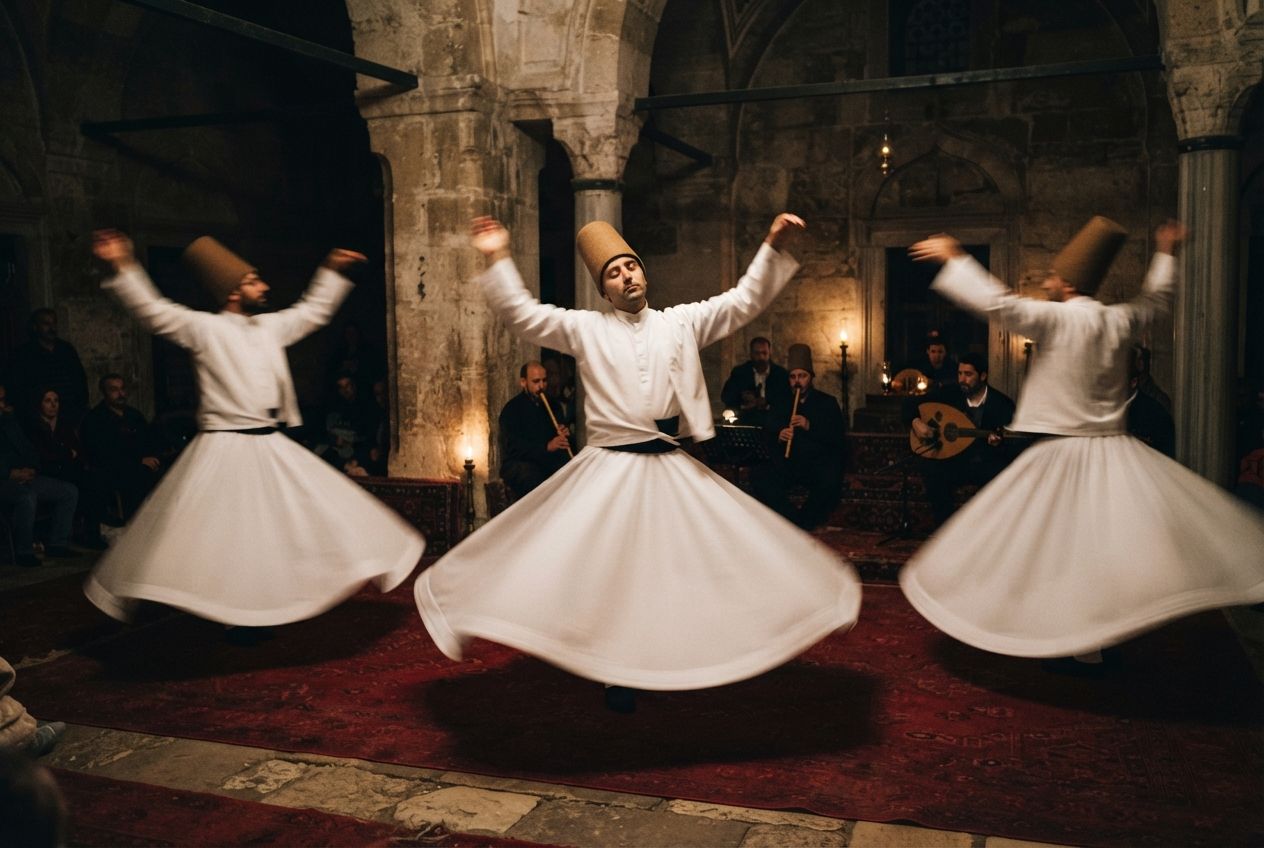
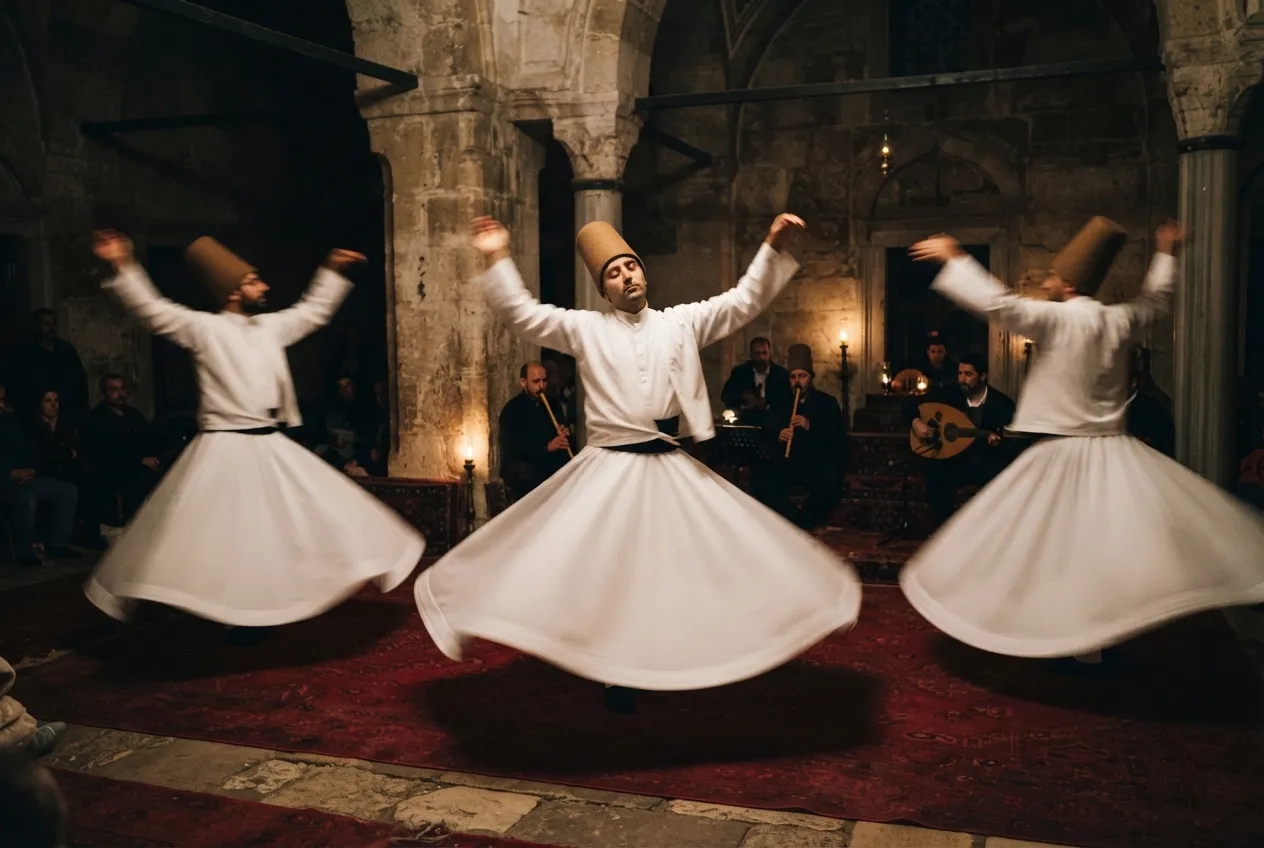
The sema is the ritual of the Mevlevi order, a Sufi brotherhood founded in Konya after the death of the poet and mystic Jalal al-Din Rumi (Mevlana) in 1273. It is a form of dhikr, the remembrance of God, performed through music, recitation and turning. UNESCO listed the Mevlevi sema ceremony as intangible cultural heritage in 2008. In Istanbul it is presented to visitors in cultural centres and historic buildings, including former lodges.
A ceremony lasts about 45 minutes to an hour. Musicians and singers open with a eulogy to the Prophet and a ney improvisation. The semazens then walk the floor three times, drop their black cloaks and turn through four sections called selams, the right palm facing up and the left down. It closes with a recitation from the Quran. Nobody explains the ritual while it happens. Seats are in rows or around the floor, and no food is served.
This is different from a Turkish night, and ticket pages do not always make the distinction clear. A Turkish night is a dinner show in a restaurant or on a Bosphorus boat, with belly dance, regional folk dances and sometimes a short dervish turn between them. That turn is a staged excerpt, performed as entertainment. If you want the ceremony, look for a ticket that names the sema on its own, with no dinner and no other acts.